
Share this Post

Need help with your money or investments? Book a consultation to learn more about working together.
SpaceX IPO, Index Funds, and What It Means for Long-Term Investors
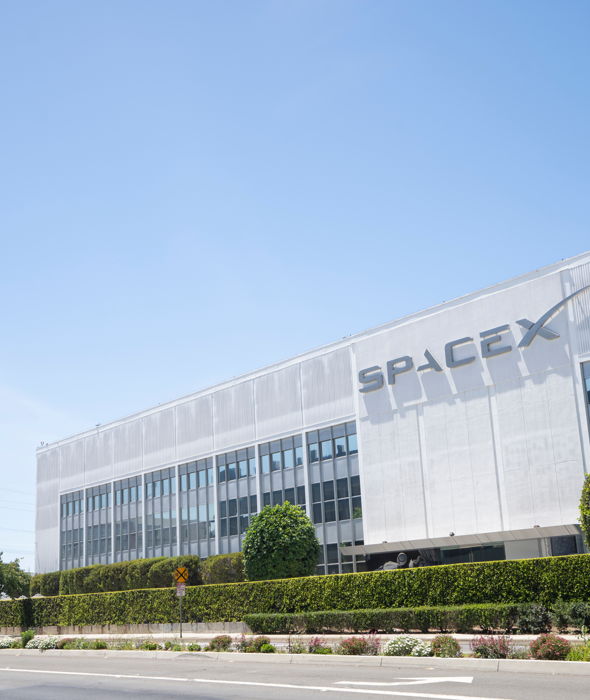
As of June 12, 2026, SpaceX has become one of the biggest financial headlines of the year.
The company’s public market debut has attracted enormous attention from investors, the media, and anyone who has followed Elon Musk, reusable rockets, Starlink, or the future of space exploration. Reports indicate that SpaceX raised roughly $75 billion in its IPO, with trading beginning under the ticker SPCX and valuations quickly moving into the trillion-dollar range.
Naturally, I have received questions from clients, friends, and family.
“Should we own SpaceX?”
“Will it be added to my index funds?”
“Are we missing out if it is not in the portfolio right away?”
“Does this change our investment strategy?”
These are good questions. They are also the kind of questions that tend to arise whenever a well-known private company becomes public. SpaceX is a fascinating company, but the investing lesson goes beyond one stock.
The bigger issue is understanding how indexes work, how index inclusion happens, and why a disciplined investment strategy should not depend on chasing the newest headline.
First, What Is an Index?
An index is a rules-based collection of investments designed to represent a specific segment of the market.
Think of it as a standardized recipe for tracking a certain group of companies. The recipe may be designed to follow large U.S. companies, small companies, international companies, technology companies, dividend-paying companies, or nearly the entire stock market.
The S&P 500, for example, is intended to represent many of the largest publicly traded companies in the United States. The Nasdaq 100 is more concentrated in large non-financial companies listed on the Nasdaq exchange. A total stock market index is broader and may include thousands of companies across different sizes and industries.
The important point is that an index is not the same thing as an investment account. You cannot invest directly in an index. Instead, mutual funds and exchange-traded funds, commonly called ETFs, are often built to track an index.
When you buy an S&P 500 index fund, the fund is attempting to mirror the S&P 500 index. When the index changes, the fund usually has to adjust its holdings to stay aligned with that index.
This is why index inclusion matters.
If a company is added to a major index, funds that track that index may need to buy shares. If a company is not yet included, those same funds generally will not own it unless their rules allow for it elsewhere.
But index inclusion is not a judgment that a company is a great investment. It simply means the company meets that index’s rules. Those rules may include company size, trading volume, profitability, public trading history, sector classification, and how many shares are actually available for public investors to buy and sell (public float).
That last point matters.
A company can have a very large total valuation but still have a relatively small amount of stock available to the public. Many indexes are float-adjusted, which means they do not necessarily weight a company based on its full market value. They weight it based on the portion of shares that can realistically trade in public markets.
That is important in the case of SpaceX because early reports suggest only a relatively small percentage of its shares were initially available to public investors. Barron’s reported that only about 4% of SpaceX shares were expected to be publicly floated at the IPO, which could limit its initial weight in many index-tracking funds.
In plain English, a company can be huge without immediately becoming a huge position inside every index fund.
Will SpaceX Be Added to Major Indexes?
The answer is: it depends on the index.
Not all indexes follow the same rules. Some index providers appear willing to add SpaceX quickly. Others are taking a more cautious approach.
MSCI has confirmed it will apply early inclusion rules for large IPOs to its Global Standard Indexes, which could lead to SpaceX being added relatively soon if it meets the necessary criteria.
Nasdaq has also adjusted rules that may allow large new public companies to enter the Nasdaq 100 more quickly than in the past. MarketWatch reported that Nasdaq may allow SpaceX to be included in the Nasdaq 100 as soon as 15 trading days after its debut, while CRSP and FTSE Russell have also adopted faster pathways for certain large IPOs.
The S&P 500 is different.
S&P Dow Jones Indices recently decided not to fast-track mega-cap IPOs into the S&P 500, S&P MidCap 400, or S&P SmallCap 600. The existing framework includes requirements such as a public trading history and profitability standards.
That means SpaceX may not immediately appear in S&P 500 index funds, even if it becomes one of the largest companies in the public market.
This is not necessarily a statement that SpaceX is a bad company. It is a reflection of index methodology.
Index Inclusion Is Not the Same as Investment Merit
One of the most important things investors can understand is that index inclusion does not automatically mean a company is a good investment at a given price.
It also does not mean a company excluded from an index is a poor investment.
Index inclusion is about rules. Investment merit is about expected return, valuation, profitability, risk, cash flow, and how a holding fits within a broader portfolio.
There are many reasons an index committee may wait before adding a company. A new public company may have limited trading history. It may have a small public float. It may not yet be profitable. Its share price may be extremely volatile. Insiders may still hold most of the shares. Lockup periods may limit trading for months.
In SpaceX’s case, investor excitement is understandable. The company has built reusable rocket systems, expanded Starlink, and become a major force in aerospace and satellite communications.
However, a company can have an exciting story, a visionary mission, and strong public interest, but investors still have to ask a separate question: at today’s price, are the expected future profits likely to justify the valuation?
Some reports have also noted that SpaceX has recently posted significant losses, despite rapid revenue growth. Reuters reported that S&P Global would not include SpaceX in the S&P 500 in part because of profitability requirements, noting that SpaceX posted a loss in 2025.
This does not mean SpaceX cannot become a profitable and successful long-term public company.
It simply means investors should separate the quality of the story from the price of the stock.
Why Investors Should Not Be Concerned About Immediate Inclusion
Investors should not be worried if SpaceX is not immediately included in every index they own.
A well-diversified portfolio is not designed to capture every exciting stock on day one. It is designed to provide broad exposure to long-term wealth creation while managing risk in a thoughtful way.
There will always be companies that enter the public markets after years of private growth. Some will continue to succeed. Some will disappoint. Some will be excellent businesses but poor investments if purchased at too high a valuation.
The goal is not to own every headline stock immediately.
The goal is to own a disciplined portfolio aligned with your financial plan.
For many investors, especially those nearing retirement or already retired, the most important question is not, “Do I own the hottest IPO?”
The better question is, “Is my portfolio positioned to support my income needs, manage taxes, control risk, and participate in long-term market growth?”
That is where discipline matters.
Our Investment Philosophy: Diversification, Profitability, and Discipline
Our investment philosophy is not built around predicting which IPO will dominate the news cycle.
It is built around diversification, quality, profitability, risk management and long-term planning.
We generally prefer broad exposure over concentrated bets. We want portfolios that can participate in growth without depending too heavily on any single company, sector, founder, or theme.
Profitability matters because, over time, businesses need to generate cash. Revenue growth can be exciting, but revenue alone does not pay shareholders. Durable profits, strong balance sheets, reasonable valuations, and disciplined capital allocation are what tend to support long-term investment outcomes.
That does not mean we avoid innovation. Far from it.
A diversified strategy can still own innovative companies. It can own technology. It can own aerospace. It can own artificial intelligence beneficiaries. It can own companies that are reshaping industries.
The difference is that we do not want a client’s retirement plan to depend on guessing which highly publicized company will justify a very optimistic valuation.
That distinction matters.
The Risk of Chasing IPO Excitement
IPO excitement can be powerful.
When a household-name company goes public, investors often feel pressure to act quickly. The fear of missing out can be intense, especially when early trading headlines show big gains.
But IPOs can be difficult investments.
The early public price may already reflect years of private-market appreciation. Large institutions, insiders, and early employees may have owned shares long before public investors had access. The IPO may be priced during a period of intense enthusiasm. Later, when lockup periods expire, additional shares may enter the market and create selling pressure.
That does not mean every IPO is bad. It means the first trading days of a famous company are rarely the ideal time for emotional decision-making.
A public listing gives investors access. It does not guarantee attractive future returns.
For clients with significant assets, retirement income needs, tax considerations, charitable goals, estate planning issues, and family wealth priorities, portfolio decisions should be made through a much broader lens.
What About Index Funds That Eventually Buy SpaceX?
Some clients may own funds that eventually include SpaceX.
That is normal.
If a total market index or a growth-oriented index adds SpaceX, then index-tracking funds may buy it according to that index’s rules. If SpaceX later becomes eligible for the S&P 500, S&P 500 index funds may buy it at that time.
This is how index investing works.
The key point is that index funds do not all buy the same stocks at the same time. They follow different benchmarks. Those benchmarks follow different methodologies. As a result, two investors who both say they “own index funds” may have different exposure to SpaceX.
Some may own it soon. Some may own it later. Some may own it only in very small amounts. Some may not own it at all, depending on the funds they hold.
That is not a problem by itself.
A portfolio should be judged by whether it is helping you pursue your financial goals, not whether it immediately owns one specific company.
The Bigger Lesson: Markets Evolve, but Principles Endure
SpaceX is a reminder that markets evolve.
Companies are staying private longer. By the time some businesses come public, they may already be massive. This creates a challenge for index providers, because old rules were built for a market where companies often went public earlier in their life cycle.
That is why some indexes are adapting their rules, while others are maintaining more traditional standards.
But for investors, the core principles remain the same.
Diversification still matters.
Profitability still matters.
Valuation still matters.
Risk management still matters.
Taxes still matter.
Your personal financial plan still matters more than the latest market headline.
A company can be revolutionary and still carry investment risk. A stock can rise sharply and still be overpriced. An index can add a stock and still not make it appropriate as a concentrated position. A company can be excluded from an index and still eventually become a meaningful holding.
Good investing requires patience.
What I Am Watching From Here
As your advisor, I am paying attention to several things.
First, I am watching which indexes add SpaceX and when. This affects certain funds more than others.
Second, I am watching how much public float is available. A low float can make early trading more volatile and can limit the actual size of the position inside float-adjusted indexes.
Third, I am watching profitability. SpaceX may have enormous long-term potential, but profits and cash flow will matter as a public company.
Fourth, I am watching valuation. Even outstanding companies can deliver disappointing returns if investors pay too much upfront.
Finally, I am watching how the IPO affects broader market concentration. If a small number of very large companies dominate index returns, investors need to understand how much risk is tied to those names.
None of this means we need to react emotionally.
It means we stay informed, stay disciplined, and make decisions within the context of each client’s financial plan.
What This Means for Your Portfolio
For most clients, the SpaceX IPO does not require a sudden portfolio change.
If your portfolio is diversified, aligned with your risk tolerance, and built around your retirement income needs, the existence of a new public company does not automatically change the plan.
That is especially true for investors approaching retirement.
At this stage of life, the focus is often less about finding the next exciting stock and more about turning accumulated wealth into a reliable strategy. That means managing sequence-of-returns risk, creating tax-efficient income, coordinating Social Security, planning for required minimum distributions, preserving flexibility, and avoiding unnecessary concentration.
A single IPO, even a historic one, should not override that process.
Final Thoughts: Stay Informed, Not Reactive
The SpaceX IPO is important. It is newsworthy. It may influence certain indexes and funds. It may become a meaningful public company holding across many portfolios over time.
But it does not change the fundamentals of prudent investing.
We do not build portfolios around headlines. We build them around goals.
We do not chase every exciting public debut. We focus on disciplined exposure to profitable companies, thoughtful diversification, risk management, and long-term financial planning.
For clients wondering whether they are “missing out,” the answer is usually this: a sound investment strategy is not measured by whether it owns one company on the first day it trades.
It is measured by whether it gives you a high probability of meeting your goals while allowing you to sleep well at night.
That remains our focus.
Disclosure
All investing involves risk, including loss of principal. Past performance does not guarantee future results. No investment strategy can guarantee success or protect against loss in all market environments. Any discussion of individual stocks, funds or strategies is for illustrative purposes only and should not be interpreted as a recommendation to buy, sell or hold any security. Investment strategies should always be considered in light of an investor’s own goals, time horizon, liquidity needs, and risk tolerance. Please consult your financial advisor before making any investment decisions.